Strength for the Long Haul: A Gentle Introduction
Muscle matters more with each decade. This is a friendly overview of simple strength habits you can try at home.
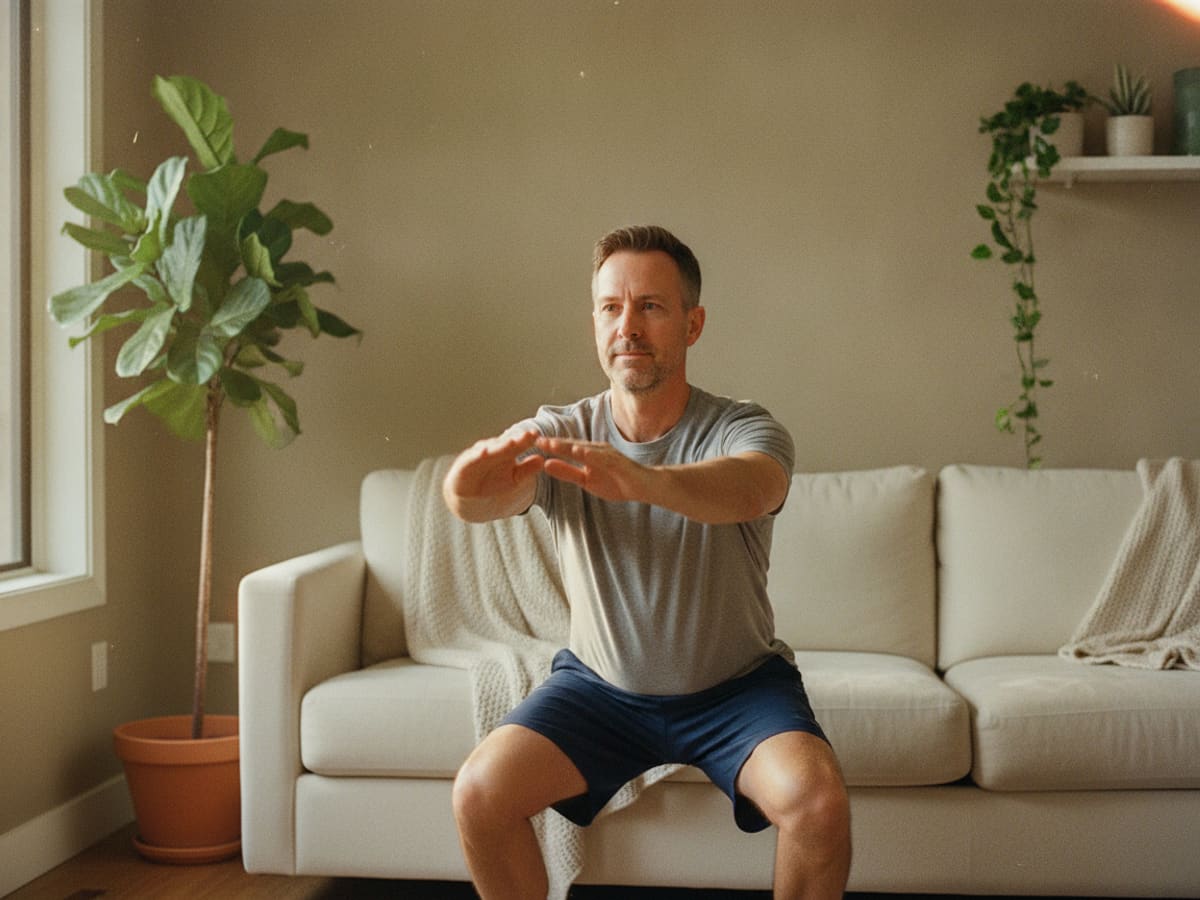
What resistance exercise is
Resistance exercise is any movement where your muscles work against some kind of load. That load might be your own body weight, a stretchy band, a bag of groceries, a set of dumbbells, or a machine at a gym. The point is simple: your muscles push or pull against something, and they respond by staying capable.
It is different from cardio, which mostly asks your heart and lungs to keep going over time. Both are useful. Resistance work just tends to get less attention, especially once life gets busy.
You may hear it called strength training, weight training, or resistance training. They all mean roughly the same thing.
Why it matters in everyday life
People talk about strength after 40 because muscle naturally changes as we age. Without regular use, most of us gradually lose some muscle mass and strength over the decades. It tends to happen quietly, so you may not notice it until a task feels harder than it used to.
That is where everyday life comes in. Strength shows up in ordinary moments:
- Standing up from a low couch without pushing off with both hands
- Carrying bags from the car in one trip
- Climbing stairs without holding your breath
- Lifting a suitcase into an overhead bin
- Getting up from the floor after playing with a child or a pet
- Keeping your balance if you stumble on an uneven sidewalk
Resistance exercise also puts healthy stress on your bones, which helps them stay strong. Many people find that moving with a bit more strength makes them feel steadier and more confident in their bodies.
None of this requires a dramatic overhaul. You do not need to become an athlete. You are simply keeping the abilities you already rely on.
Starting with body weight
You do not need equipment or a membership to begin. Your own body is a perfectly good starting load. Here is a simple set of movements that cover most of the major muscle groups:
- Sit-to-stand. Sit on a sturdy chair, then stand up slowly and sit back down with control. This mimics something you do every day.
- Wall push-up. Stand facing a wall, place your hands on it at chest height, bend your elbows to lean in, then press back out.
- Glute bridge. Lie on your back with knees bent and feet flat, then lift your hips a few inches and lower them back down.
- Supported step-up. Using a low, stable step and a rail or wall for balance, step up and then back down.
- Bird dog. On hands and knees, extend one arm forward or one leg back, hold briefly, and switch sides.
Start with a small number of repetitions, perhaps eight to ten of each, and stop while you still feel you could do a couple more. Move slowly, especially on the way down. Slow, controlled movement is more useful than speed.
As these start to feel easier over the weeks, you can add repetitions, try a slightly harder version, or bring in a band or light weights. Gradual change is the whole idea.
Pacing yourself and resting well
Many people do well starting with two non-consecutive days a week. A schedule like Monday and Thursday leaves room in between for your body to recover. Muscles get stronger during rest, not only during the exercise itself.
Mild muscle soreness a day or two after a new routine is common, especially at first. It should be a dull, general tiredness, not sharp or lasting pain. If you feel quite sore, give yourself an extra rest day and go lighter next time.
A few habits help with recovery:
- Sleep regularly when you can
- Drink water throughout the day
- Eat regular meals that include some protein
- Take easy walks on rest days if you feel like moving
Progress rarely moves in a straight line. Some weeks you will feel strong, and others you will feel tired or stretched thin. Both are normal. Showing up in a smaller way still counts.
Safety basics and when to ask a professional
A few simple habits keep things comfortable:
- Warm up for a few minutes with easy walking or gentle arm and leg circles
- Breathe steadily. Exhale as you push or lift, and avoid holding your breath
- Choose a pace you can control
- Keep your movements within a range that feels comfortable
- Stop if something hurts in a sharp or unusual way
Good form matters more than how much you lift. If you are unsure about a movement, a certified fitness professional or physical therapist can show you how to do it and adjust it for your body. Even one or two sessions can help you feel more at ease.
Strength is something you build in small, ordinary steps. Begin where you are, keep it manageable, and let it become part of the life you already have.